Meet our Incentive Provider: Port of Yokohama, driving decarbonization at scale
With a legacy spanning more than 160 years, the Port of Yokohama is combining global trade leadership with a clear commitment to cleaner and more sustainable shipping.
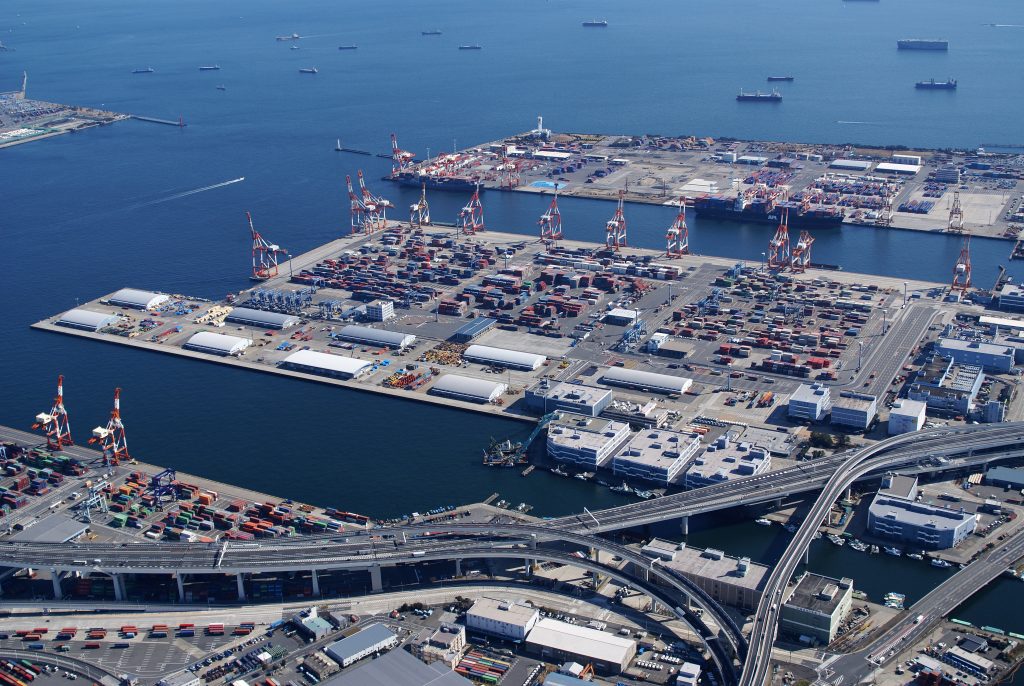
Aerial view of the Port of Yokohama container terminals © Shutterstock
Since opening in 1859, the Port of Yokohama has played an important role in Japan’s economic development and international trade. As the country’s leading port for ocean-going vessel calls since 1964, it serves as a vital gateway linking East Asia with North America and the wider world.
Today, that global position also shapes the port’s long-term approach to sustainability. As a Green Award Incentive Provider, the Port of Yokohama encourages high-performing vessels by offering incentives to certified ships.
A global gateway supporting responsible maritime operations
Strategically located near the mouth of Tokyo Bay, the Port of Yokohama benefits from calm waters and deep natural depths, making it a key first and last port of call on major trans-Pacific routes. Handling over 3.1 million TEU annually and serving as one of Japan’s main automotive export hubs, the port operates at significant scale and recognizes the responsibility that comes with it.
As an all-round maritime hub, the Port of Yokohama handles diverse cargo flows, including containers, dry and liquid bulk, and automobiles, while supporting logistics, production and tourism, reflecting its role as both a major commercial and industrial port with a well-balanced flow of imports and exports.
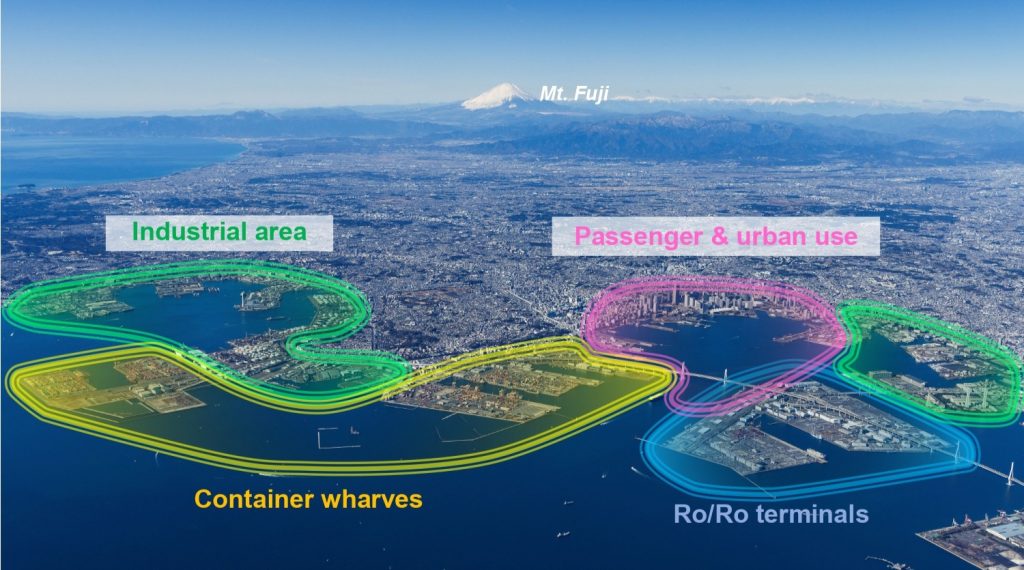
Aerial overview of the Port of Yokohama with labelled operational areas © Port of Yokohama
Advancing decarbonization through collaboration
In March 2025, the Port of Yokohama launched its Port and Harbor Decarbonization Plan, supporting Japan’s ambition to achieve a carbon-neutral society by 2050. The plan focuses on enabling the energy transition of vessels and waterfront industries through next-generation marine fuels, collaboration with offshore wind and power providers, and the exploration of onshore power supply for berthed cruise ships.
Alongside climate action, the port is investing in nature-positive measures such as biosymbiotic seawalls and the creation of seaweed beds and shallow-water habitats.
In total, more than 120 public-private initiatives are being advanced as part of this collective effort.
This approach has earned the Port of Yokohama major global recognition. Its project “Port Decarbonization Plan: 121 public and private partnership projects” received the top prize in the Climate and Energy category at the IAPH 2025 Sustainability Awards, making Yokohama the first Japanese port to receive this honor.
As a major international gateway, the Port of Yokohama sees it as its responsibility to actively support the transition toward cleaner and more sustainable shipping. Through collaboration with industry and public partners, we aim to accelerate decarbonization across the entire port community
– Port of Yokohama
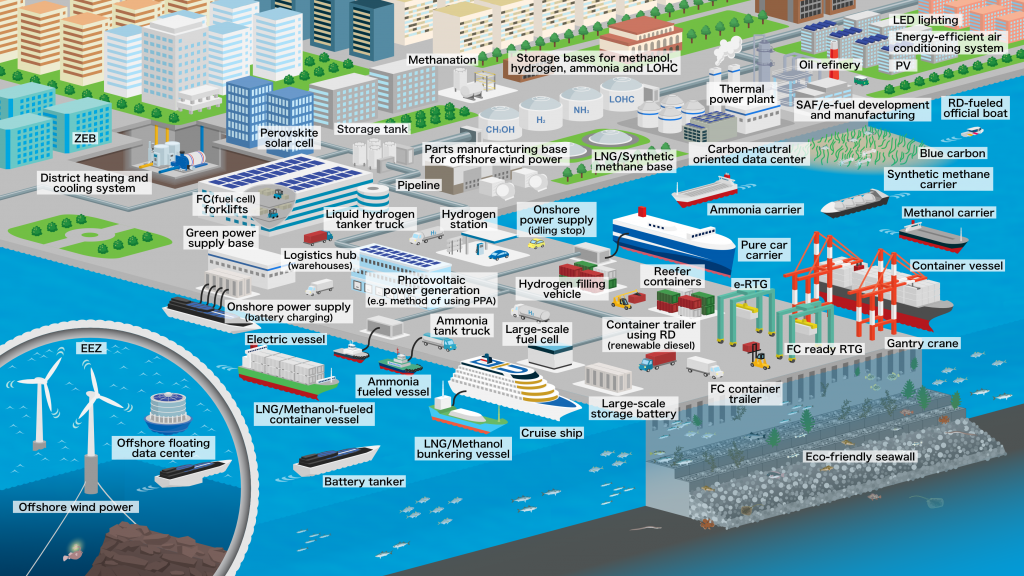
Illustration of the Port of Yokohama’s future vision for a Carbon Neutral Port © Port of Yokohama
Partnering through Green Award
As a Green Award Incentive Provider, the Port of Yokohama works alongside shipowners and operators who share a commitment to cleaner, safer shipping. Green Award certified sea-going vessels benefit from a 15% discount on the entrance fee of port dues, providing a clear financial incentive for high environmental and safety performance.
By offering incentives to certified vessels, the port supports tangible action toward reducing emissions while maintaining high operational standards.
With its scale, collaboration, and long-term vision, the Port of Yokohama demonstrates how ports can move beyond compliance and become active drivers of sustainability in the maritime sector.